Every notification is a request for your attention. Most of them arrive without you ever agreeing to the terms.
You install an app. You create an account. Somewhere in the process you tap “Allow” on a permissions screen, or the app simply assumes permission by default. From that moment the product can reach into your day at any time and ask for a response. The cost of that reach is almost zero for the sender and often non-trivial for you.
This is not a neutral feature. It is a one-sided contract.
How the Contract Works
A notification has three parts:
The product decides something is worth interrupting you for.
The system delivers the interruption to a surface you are likely to see—lock screen, banner, badge, watch, sound.
You are left to deal with the cognitive and emotional residue, whether you act on it or not.
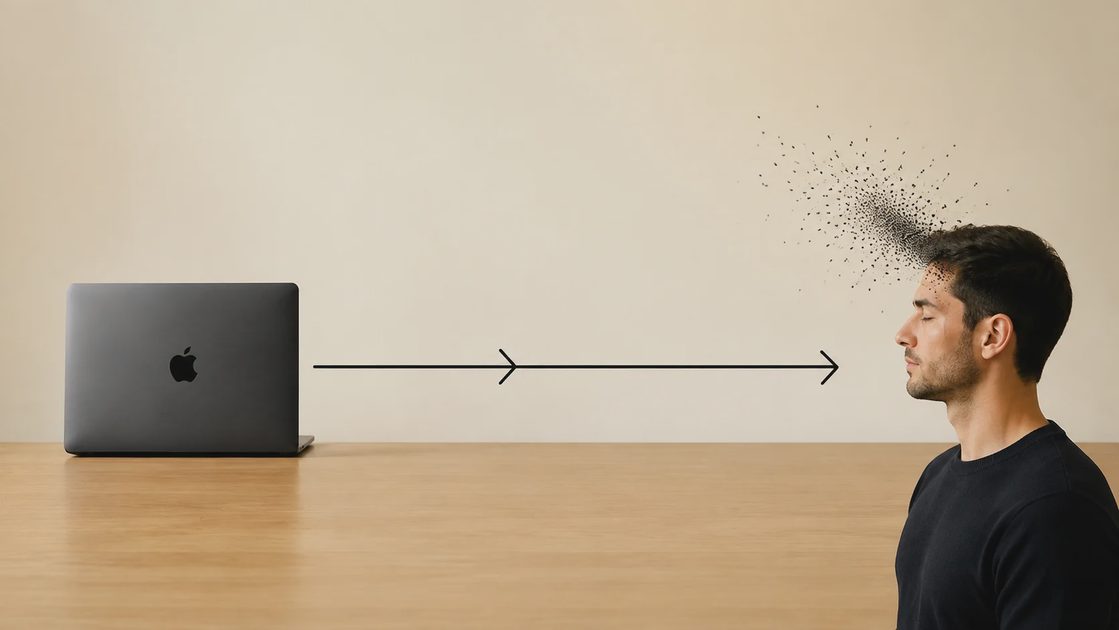
The product captures the benefit (higher engagement, faster response, more data). You absorb the cost (broken focus, elevated baseline stress, the small tax of deciding whether this particular ping matters).
Most people never renegotiate the terms. The default settings remain in place for years. The badges stay on. The sounds stay on. The assumption that every app has a standing right to interrupt stays unchallenged.
What I Used to Ship
I have written the copy for permission screens. I have designed the logic that decides which events trigger a push. I have sat in meetings where we looked at open rates and conversion lifts from notifications and treated higher numbers as unambiguous wins.
We rarely measured the other side of the ledger: how many of those interruptions were actually useful to the person receiving them, or what they displaced. The metrics we optimized for lived inside the product. The costs lived inside someone’s day.
That asymmetry is the core of the contract. It is easy to send. It is harder to receive.
What Changes When You Treat It as a Contract
Once you start seeing notifications as ongoing requests rather than inevitable features, the decisions become clearer.
You can revoke permission entirely for apps that do not need real-time access.
You can keep permission but disable badges and sounds, so the information arrives only when you choose to look.
You can keep a very small number of sources that are allowed to break through—calls from people, maybe calendar alerts—and silence everything else.
None of these moves require deleting apps or adopting an extreme stance. They simply move the decision back to you. The product still exists. It just no longer has unilateral rights to your attention.
I run my phone this way. Almost nothing is allowed to make a sound or show a badge. The few exceptions are deliberate. The rest wait until I open the app. The volume of interruptions dropped dramatically. The number of important things I missed did not.
The Practical Test
For any app that currently sends you notifications, ask two questions:
If this message arrived three hours later, would anything meaningful be lost?
Does this product have a legitimate need to reach me faster than I would naturally check it?
If the answer to both is no, the notification is not a service. It is an unsolicited claim on your attention. You are allowed to decline the claim.
The Larger Pattern
Notifications are one of the clearest examples of how digital products shift costs onto the user while concentrating benefits on the side that writes the code. Infinite scroll, autoplay, default sharing settings, and many other patterns follow the same logic.
The contract is rarely presented as a contract. It arrives as a convenience, a default, a feature you are expected to accept. You can still rewrite the terms.
You need less than you think. Most of the interruptions you receive were never necessary. They were simply never questioned.