Do you actually need a flip phone with spotify, or do you need fewer reasons to unlock your current phone? I asked myself that while walking through San Francisco with a camera in one pocket and a smartphone buzzing in the other. I wanted music for the walk, directions when necessary, and nothing else competing for attention.
A flip phone with spotify sits in an interesting middle ground. It is not a true dumbphone, because Spotify still brings streaming audio, playlists, downloads, and an account ecosystem. It is also not a normal smartphone, because the small screen and limited software make scrolling awkward. That friction is the point. You can keep music without keeping the entire attention economy in your pocket.
What a flip phone with Spotify actually means
The phrase covers several different products. Some modern flip phones run Android and can install Spotify directly. Others support a limited music app, Bluetooth audio, or file playback but cannot run the official Spotify application. A few older models are technically smart devices but have such small displays, slow processors, or outdated software that the experience feels intentionally constrained.
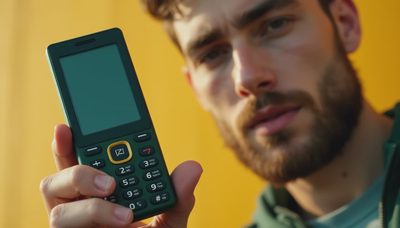
The most recognizable options include the CAT S22 Flip, a rugged Android-based flip phone, and select Alcatel or TCL flip models that support music features depending on carrier and software version. The CAT S22 Flip is closer to a compact smartphone inside a clamshell body. It has Wi-Fi, a touchscreen, and access to Android apps, although performance is modest. Carrier-branded models can be cheaper, but compatibility changes quickly, so confirm network support before buying.
A flip phone with spotify is useful only when the exact model supports your listening habits. If you need podcasts, downloaded playlists, Bluetooth headphones, and occasional navigation, look for Android compatibility and enough storage. If you only want a few albums, a phone with local music playback could be calmer and simpler.
The attention benefit is real, but specific
The design advantage is not that the phone becomes magically distraction-proof. It is that common actions become slower. On a large smartphone, opening Spotify can lead to email, messages, a browser tab, and a social feed before the first song starts. On a small flip phone, reading text, typing, and browsing are uncomfortable enough to interrupt that chain.
I worked on mobile products that used the same principle in reverse. We reduced loading friction, remembered the last screen, surfaced personalized content, and placed notifications where a thumb naturally landed. None of those choices was dramatic on its own. Together, they removed every pause in the path to another five minutes of use.
A flip phone with spotify adds pauses back into the device. You may still listen for an hour on a hike, but you are less likely to check a feed between songs. That distinction matters. The goal is not to make technology virtuous. It is to make the next distracting action slightly less convenient.
The tradeoff is that you should not expect a seamless smartphone replacement. Group chats can be frustrating, maps may be slow, and two-factor authentication can become annoying. If work depends on Slack, banking apps, or mobile document access, keep a smartphone available rather than forcing one small device to handle every responsibility.
How to choose the right model
Start with the network, not the color, hinge, or nostalgic appeal. A phone must support the bands and technology used by your carrier. Check whether it is unlocked, whether it works with your SIM or eSIM arrangement, and whether calls over current cellular networks are supported. A cheap used phone that cannot activate is not a bargain.
Next, check Spotify itself. Official support is better than a browser workaround. Look for the Android version, app compatibility, download support, Bluetooth behavior, and storage capacity. Offline listening is especially important for flights, trails, and places with weak service. Spotify Premium is generally required for downloading music for offline playback, so include that subscription in the monthly cost.
Battery capacity matters more than it sounds. A compact flip phone often lasts longer than a touchscreen smartphone because its display is small, but streaming over cellular, Bluetooth, and weak signals still consume power. A practical setup includes a short USB-C cable and a small battery pack if you spend full days outside.
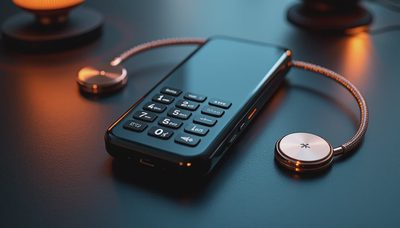
Physical controls are another advantage. A dedicated volume rocker, play button, or directional pad lets you manage music without opening a bright screen. Some models handle calls well but make track selection clumsy. Read recent owner reports and look for details about hinge durability, speaker quality, charging ports, and software updates rather than relying on product photos.
A realistic daily setup
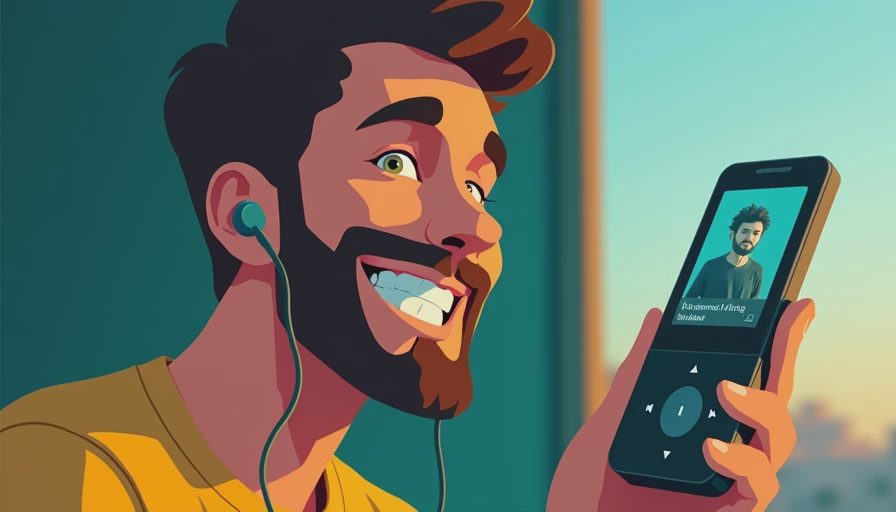
My preferred arrangement is simple: one playlist for work, one for walking, and a few downloaded albums for travel. I pair the phone with wired earbuds when I want zero pairing decisions, or with compact Bluetooth headphones when I am moving through the city. Notifications stay off except for calls and messages from selected contacts.
The music app should not become a new rabbit hole. I would avoid browsing personalized recommendations every morning. Build playlists on a computer, download them, and treat the phone as a player rather than a discovery machine. That single change preserves the useful part of streaming while removing much of the endless interface around it.
For navigation, I use a separate smartphone before leaving or carry a small dedicated GPS when a hike requires dependable route guidance. For emergencies, I keep the smartphone charged in a bag instead of carrying it in my hand. This is less convenient than an all-in-one setup, but inconvenience is sometimes the boundary that protects the experience.
A flip phone with spotify also works well as a transitional device. You do not need to cancel your smartphone plan immediately. Try the smaller phone on evenings, weekends, or commutes. Notice what you miss, what you reach for automatically, and which tasks genuinely require a large screen. After two weeks, the answer is usually clearer than it was before purchase.
Who should skip it
Skip this category if you need reliable video calls, frequent rideshare bookings, mobile payments, complex authentication, or constant access to work tools. You can technically solve many of these problems, but the workaround cost can exceed the attention benefit. A product that creates daily friction in essential tasks will probably end up in a drawer.
You should also skip a flip phone with spotify if your main goal is absolute disconnection. Spotify is still a connected service. It has recommendations, artwork, search, and a subscription. A basic MP3 player or an old iPod-style device can go further if you already own music files and do not need streaming convenience.
This is also not the right experiment for someone who dislikes physical keyboards or has accessibility needs that require a large, high-contrast touchscreen. The best minimalist tool is the one you can use comfortably. There is no virtue in buying a device that makes ordinary communication exhausting.
The one thing I would keep
Would I buy a flip phone with spotify? Yes, but only for a defined job: music, calls, and a little messaging during periods when I want my smartphone out of reach. I would not buy one expecting a complete digital reset, and I would not pay a premium for a novelty hinge.
The strongest choice is a supported model with dependable LTE service, offline Spotify downloads, Bluetooth, USB-C charging, and enough storage for your real playlists. Test it before changing your entire routine. If the phone lets you walk, work, or rest without reflexively opening a feed, it is doing something valuable.
You need less than you think, but you still need the right less. For me, that means keeping the music and removing the menu of temptations around it. Start with one weekend, one playlist, and one honest question: did the smaller device give your attention back?