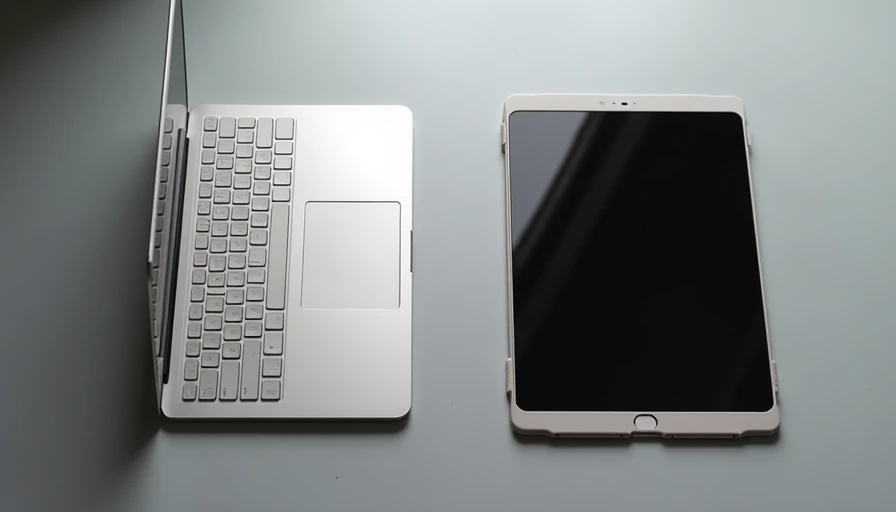
I spent $1,700 on an iPad Pro that I mostly used for Netflix.
For three years, I carried both a MacBook Pro and an iPad Pro—the full setup. The laptop sat on my desk for real work. The iPad sat on my nightstand for watching shows. Sometimes I'd bring it on trips, telling myself I'd be productive on the plane. Then I'd open Netflix.
That $1,700 second screen wasn't a tool. It was a toy I convinced myself was a tool.
The Overlap Problem
Let's be honest about what these devices actually do.
A laptop is a general-purpose computing machine. It runs full operating systems, multitasking with multiple windows, handles complex software, and has a keyboard and trackpad built in.
A tablet—even a high-end one with a keyboard case—is a larger smartphone that can also accept stylus input. It runs mobile apps (or tablet-optimized apps), has a touch-first interface, and trades raw capability for portability and a different interaction model.
The overlap between these two devices is massive. And for most people, it's nearly 100%.
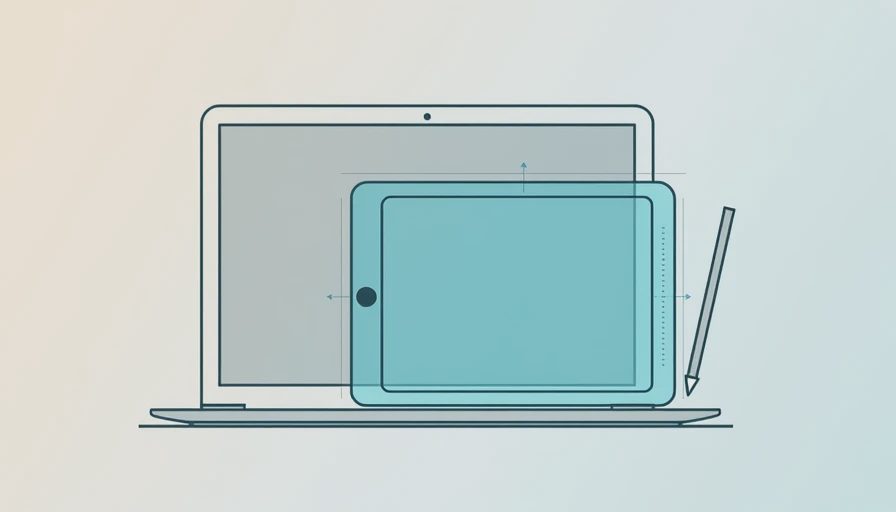
Here's a test: If you use your tablet for web browsing, email, video calls, document reading, note-taking, and media consumption—congratulations, that's exactly what a laptop does too.
The only difference is the form factor. And the question you need to ask yourself is: is that form factor difference worth the cost?
What I Actually Used Each For
Let me give you an honest breakdown of how I used both devices over one typical month.
Laptop
Writing and editing long-form content (40%)
Design work in Figma (25%)
Email and project management (20%)
Video calls (10%)
Everything else (5%)
iPad
Watching Netflix and YouTube (60%)
Reading articles and PDFs (20%)
Taking handwritten notes (10%)
Trying to be productive (5%)
Actually being productive (5%)
The iPad's "killer feature"—handwriting with the Pencil—was something I used maybe twice a week. And when I did, it was fun. It felt futuristic. But I never actually needed it. I could have typed those notes on my laptop in half the time.
The iPad wasn't a tool. It was a toy that I convinced myself was a tool.
The Marketing vs. The Reality
Apple sells the iPad Pro with a famous tagline: "Your next computer is not a computer."
It's brilliant marketing. It makes you feel like you're ahead of the curve. Like you're embracing the future while everyone else is still stuck in the past.
Here's the reality: the iPad Pro is a computer. It's just a computer with severe limitations. Multitasking is clumsy. File management is a joke. The keyboard case is fine but not great. And the apps—even the "pro" ones—are still mobile apps. They are not the desktop versions you're used to.
The iPad Pro cannot replace a laptop for any serious, sustained work. Not for a writer who needs to manage research and drafts. Not for a designer who needs Figma and Photoshop. Not for a developer. Not for anyone who needs to work with files, multiple windows, or complex workflows.
What the iPad Pro can replace is a laptop for casual use. Browsing. Emailing. Reading. Watching. If that's all you do, the iPad is great. But you don't need a laptop if that's all you do.
The marketing wants you to believe the iPad can do everything. It can't. And the sales pitch is designed to make you feel like you're missing out if you don't buy both.
The Decision Framework
Here's how you decide whether you need one, the other, or both.
You need a laptop if:
You do any kind of serious content creation (writing, design, video, audio, coding).
You work with spreadsheets, databases, or complex software.
You need multiple windows and tabs for research.
You need a comfortable, reliable keyboard built in.
You manage files, folders, and external storage.
Answer: You need a laptop. Full stop.
You need a tablet if:
Your primary computing needs are reading, browsing, watching, and light email.
You value portability and touch interaction over raw capability.
You take handwritten notes as part of your workflow (students, artists, meeting note-takers).
You don't own a laptop and don't need one.
Answer: A tablet might be enough. If you own a laptop, you probably don't need a tablet.
You might need both if:
Your work relies on a laptop, but your hobby/study relies on stylus input (design sketches, handwriting-intensive note-taking).
You travel frequently and want a lightweight device for consumption while keeping your laptop for actual work.
You have a very specific workflow that genuinely benefits from the touch/handwriting interface.
Answer: This is about 10% of people. Maybe less.

What I Did
I sold the iPad.
Not because I hated it—I didn't. It's a beautiful device. But I looked at my usage data and realized I was paying $1,700 for Netflix and the occasional doodle. That didn't make sense.
I replaced it with a simple notebook and a nice pen. Cost: $25.
When I want to take handwritten notes, I write them on paper. When I want to sketch an idea, I sketch it on paper. When I need to read a PDF, I read it on my laptop. When I'm traveling, I carry one device: the laptop.
I lost nothing of value. I gained $1,700 and more desk space.
One Last Thing About "Pro"
Here's a phrase that gets used a lot: "I need the Pro version because I'm a professional."
I've used that phrase too. It's mostly a lie.
Most people who buy a "Pro" device don't need the Pro features. They're not professionals in the sense the device was designed for—they're consumers who want the best. And "the best" feels like a validation of their identity.
If you're a professional video editor, you need a Pro. If you're a professional graphic designer, you need a Pro. If you're a professional writer, you need a laptop—and it doesn't need to be Pro.
Don't buy the Pro version because you like the idea of being Pro. Buy what you actually need.
You need less than you think. Two computers don't make you twice as productive—they just make your bag twice as heavy.