
I spent eight years designing the very features that make phones hard to put down. Variable rewards. Infinite scroll. The little red badge that never quite goes away. I know exactly how the slot machine works because I helped build parts of it.
And still, for a long time, I kept adding more.
More apps. More tools. More devices that promised focus, calm, or connection. Each one felt reasonable on its own. Together they formed a quiet kind of overload I didn’t notice until I started measuring it.
This is not a detox manifesto. I’m not going to tell you to throw your phone in a lake or move to a cabin. I’m not interested in purity. I’m interested in what actually stays useful once the novelty wears off.
So here’s a simple 30-day reset I ran on myself, and that I’ve since refined with a few people who also work in tech and felt the same low-grade fatigue. It is not dramatic. It is not aesthetic. It is just a structured way of asking one question, repeatedly:
Do you actually need this?
The Premise
Most of us don’t have a technology problem. We have an accumulation problem.
We add tools faster than we remove them. The result is a digital environment that feels heavier than it should—even when every individual piece is “good.” The reset is designed to surface that weight, not to punish you for it.
You will not delete everything. You will not become a different person. You will simply run a controlled experiment on what still earns its place after the initial friction passes.
How the 30 Days Work
Days 1–3: Inventory, no judgment
Write down every app on your phone that is not a core system function.
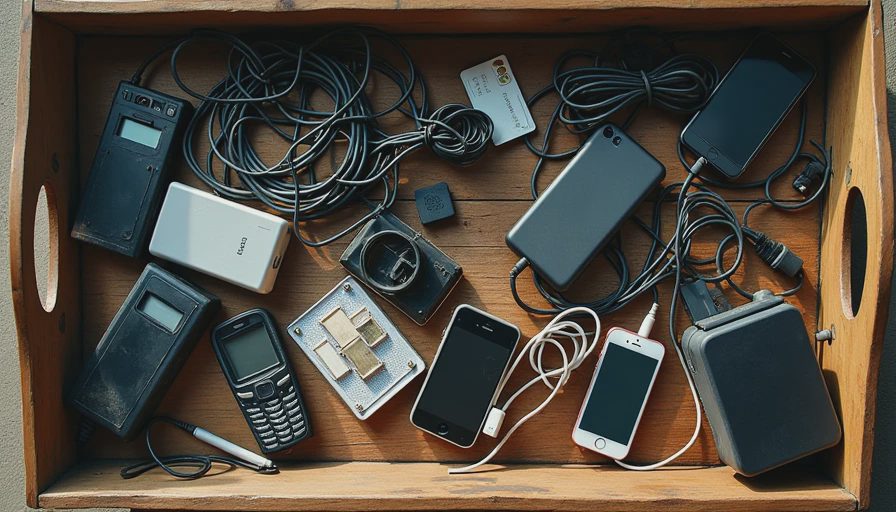
Write down every device you own that has a screen or a battery.
Write down every productivity system, note-taking method, or focus ritual you currently maintain.
Do not delete anything yet. Just look at the list. Most people are surprised by the sheer volume. That surprise is useful.
Days 4–10: The first cut
For each item on the list, ask one question only:
“If this disappeared tomorrow, would my actual work or relationships meaningfully suffer?”
If the answer is no, archive it or remove it.
If the answer is “maybe,” put it in a temporary folder or drawer and leave it alone for two weeks.
You are not deciding forever. You are deciding for the next 20 days.
Days 11–20: Live with the reduced set
Use only what remains. Notice where friction appears. Notice where it doesn’t.
This is the part most people skip. The real information is not in the deletion—it’s in what you reach for when the easy options are gone. Some tools will feel necessary. Others will reveal themselves as habits of attention rather than tools of substance.
Days 21–30: The second pass
Return to the temporary folder and the archived apps. Ask the same question again, now with evidence:
“Did I miss this in a way that actually mattered?”
Most people keep far less than they expected. A few things return. That is fine. The point is not minimalism as identity. The point is accurate ownership.
What Usually Survives
After running this a few times (on myself and with others), a pattern appears.
What tends to stay:
One reliable way to capture notes
One calendar that is actually checked
A messaging app that reaches the people who matter
A camera (sometimes just the phone’s)
A way to listen to music or podcasts without algorithmic pressure

What usually leaves:
The second note-taking app
The third focus timer
The smartwatch that mostly delivered notifications
The “productivity” tools that required more maintenance than they returned
Most of the news and social apps that lived on the home screen “just in case”
The exact list is different for everyone. The mechanism is the same.
Why This Works (When Willpower Doesn’t)
Willpower is a poor long-term strategy against products designed by people who understand variable reinforcement better than most of us understand our own attention. I know this from the other side of the design table.
A time-boxed reset sidesteps the willpower problem. You are not making a permanent identity change. You are running a short experiment with clear boundaries. The temporary nature lowers the psychological cost of removal. Once something has been gone for two or three weeks, the emotional attachment often dissolves on its own.
You also get better data. Decisions made after living without something are more accurate than decisions made while the thing is still present and convenient.
One Thing I Kept
After my own first 30-day pass, I expected to keep more than I did. The thing that surprised me most was how little I missed the color on my phone. I had already been running it in grayscale for months, but the reset made the choice feel permanent rather than experimental. Color is a powerful attention cue. Removing it is one of the highest-leverage, lowest-effort changes available.
I still have a phone. I still use apps. I still design digital products. I just own fewer of them, and the ones that remain have to answer the same question every time a new one appears:
You need less than you think.