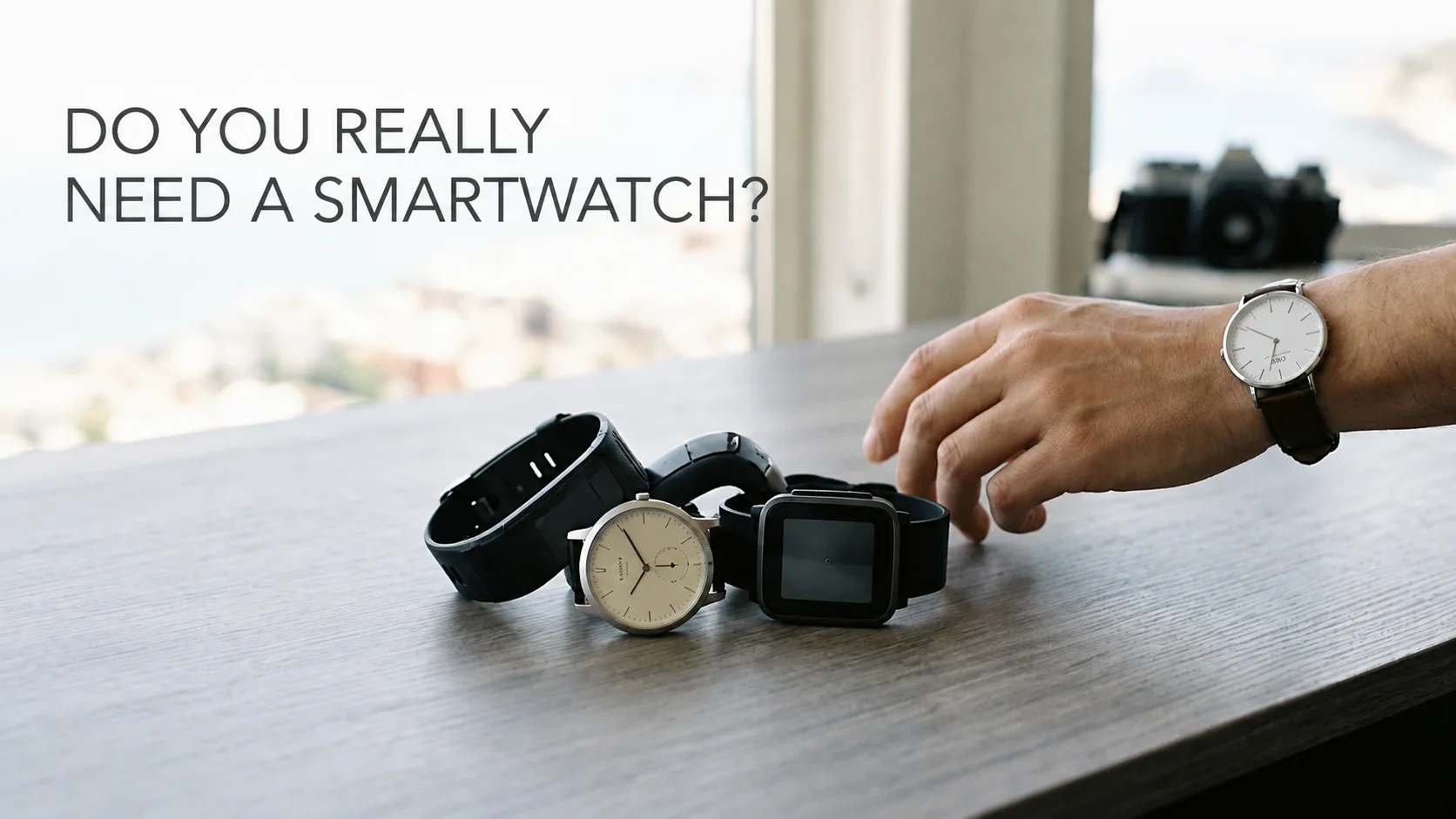
I wore three different smartwatches for a month. Not as a reviewer collecting talking points, but as someone who already checks his phone too often and wanted to know whether putting a screen on my wrist would make the problem better or worse.
The short answer most people want is a clean yes or no. The honest answer is more useful: it depends on what problem you think the watch is solving, and whether that problem is real.
What I Actually Tested
I rotated through three devices over thirty days:
A popular fitness-focused model with strong health tracking
A more minimal “hybrid” style watch that tried to stay out of the way
A full-featured smartwatch that mirrored most of my phone’s notifications
I used each one as my primary timepiece and notification surface. I tracked sleep, steps, heart rate, and the usual metrics. More importantly, I paid attention to how often I looked at my wrist, what I was looking for, and how I felt when the watch was off.
What the Watch Delivered
The useful parts were narrower than the marketing suggested.
Accurate enough step counting and heart-rate data for general awareness.
A quick glance at the time without unlocking a phone.
Occasional convenience: silencing a call, skipping a song, or checking a calendar alert without digging into a pocket.
For someone who runs or trains with intention, the continuous heart-rate and workout metrics can be genuinely helpful. For someone who mostly walks and sits at a desk, the data is interesting for about a week and then becomes background noise.
What the Watch Also Delivered
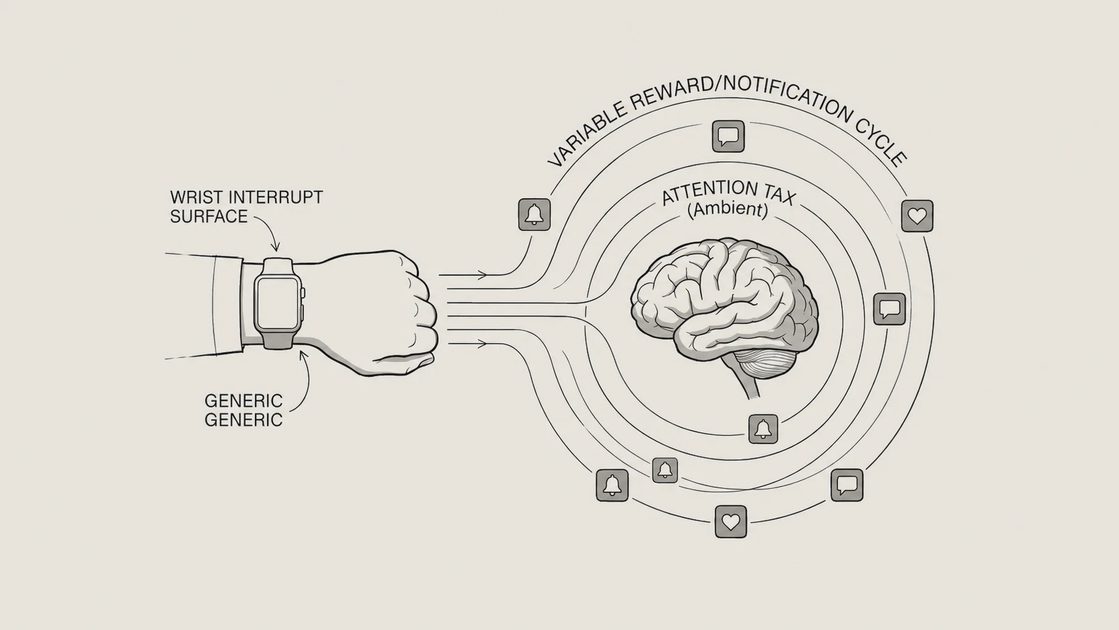
A new surface for the same attention loops I already had on my phone.
Notifications arrived faster and more often. Even with aggressive filtering, the wrist becomes a high-frequency interrupt. The vibration is harder to ignore than a phone in a bag or on a desk. I found myself checking the watch for the same reasons I used to pull-to-refresh a feed: not because I needed information, but because the possibility of new information was sitting on my body.
Battery life created its own small ritual of maintenance. Charging every day or two is not difficult, but it is one more device that needs attention. Over a month, that friction added up more than I expected.
And then there is the subtle social and personal cost of wearing a screen. A traditional watch is mostly quiet. A smartwatch is a small glowing rectangle that can light up at any moment. It changes the texture of conversations and quiet moments in ways that are easy to dismiss until you spend a week without it.
The Real Question
Most people do not need a smartwatch. They need one of two things:
Better awareness of their physical activity or sleep, or
A slightly faster way to receive certain notifications.
Both of those problems have lower-cost solutions. A simple pedometer or phone-based tracking covers the first for most people. A well-configured phone with notification controls covers the second. The smartwatch sits in the expensive middle: more data and more interrupts than a basic watch, less capability and more friction than a phone.
There are clear exceptions. If you train seriously and use the metrics to adjust your effort, the continuous data can justify the device. If you work in a role where missing a specific alert has real consequences, a discreet wrist notification may be worth the trade-off. If you simply like the object and it makes your day more pleasant, that is also a valid reason—just call it preference instead of necessity.
For everyone else, the watch tends to solve a problem that was not particularly painful while introducing a few new ones that are easy to overlook.
What I Kept
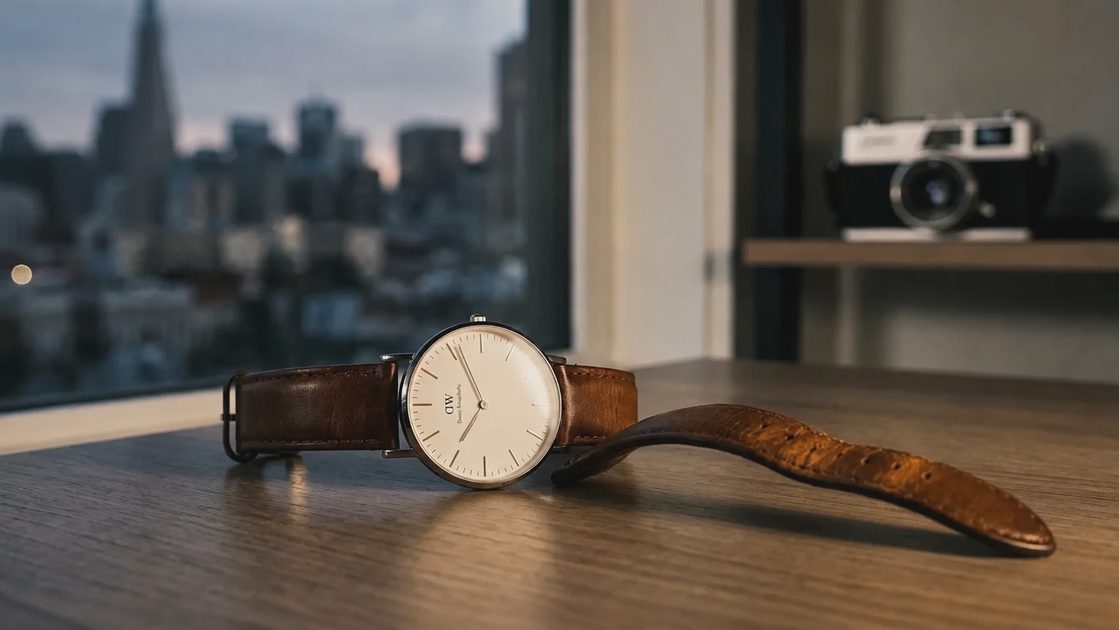
After the month ended, I put the smartwatches away. I went back to a simple quartz watch with no screen and no sensors. I still track rough activity through my phone when I feel like it. I still get notifications—just fewer of them, and only when I choose to look.
The experiment did not make me anti-smartwatch. It made the cost-benefit ratio clearer. Most of the value was concentrated in a small set of features. The rest was ambient attention tax.
You need less than you think. A screen on your wrist is rarely the missing piece. More often it is just another place for the same habits to live.