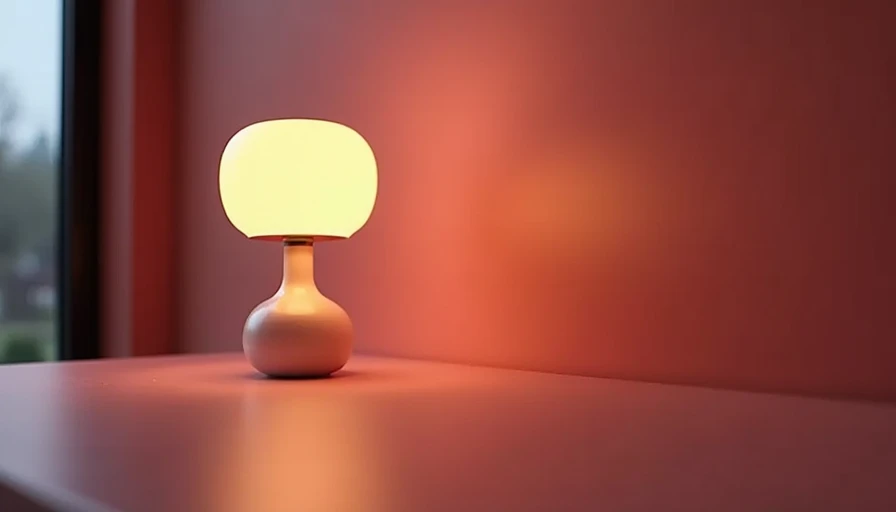
Do you actually need gantri lights? I asked myself that before putting one on the small desk in my San Francisco apartment. I already had a perfectly functional IKEA lamp, a window, and the usual stack of chargers competing for attention. The honest answer was not an immediate yes. Gantri lights are less about solving a lighting emergency and more about changing how a room feels when the overhead fixture is off.
That distinction matters. A good lamp should make reading, sketching, or finishing a late email easier. It should not become another object you have to maintain, pair, update, or explain. Gantri sells designer lamps made through 3D printing, with many designs created by independent designers and manufactured in California. The result is a product category that sits somewhere between useful lighting and small-scale sculpture.
What makes Gantri lights different?
The first difference is the manufacturing method. Gantri uses 3D printing to produce lamp bodies in a plant-based polymer, rather than relying only on injection-molded plastic or metal fabrication. That allows designers to make unusual curves, textured shades, and forms that would be expensive to prototype through conventional manufacturing. It also makes limited-run designs more practical than they would be for a mass-market lighting brand.
The second difference is visual restraint. Many Gantri lights have a soft, architectural look instead of the glossy, gadget-like finish common in smart lamps. You will find table lamps, portable lamps, wall lights, and pendant-style fixtures in colors such as clay, black, cream, and muted blue. The palette is easy to live with. It does not demand that the rest of your apartment become a showroom.
I notice this most at night. A strong ceiling light makes a room feel like a workplace, even after the laptop is closed. A smaller lamp creates a pool of light around a chair or side table. That is not a productivity hack. It is simply a better boundary between daytime work and evening recovery.
The cost of choosing a designed object
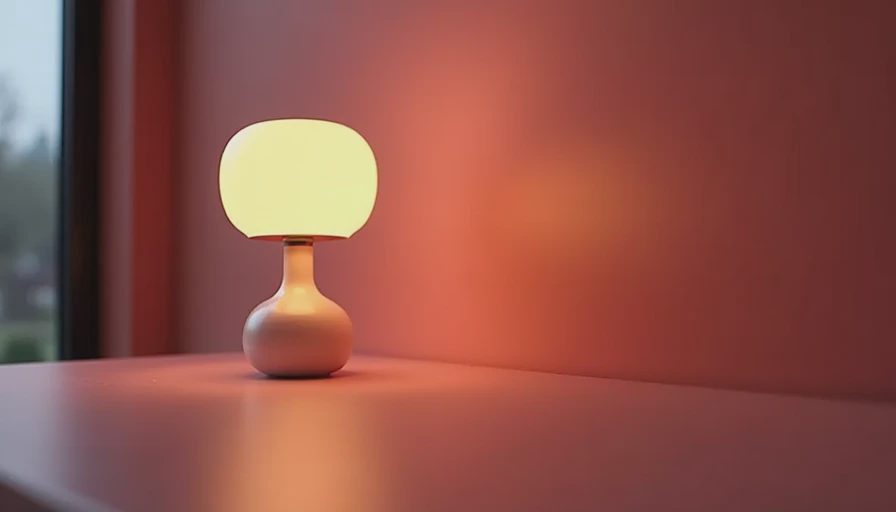
Gantri lights are not bargain lamps. Many table models land roughly between $150 and $300, while larger or more complex fixtures can cost more. That puts them above a basic Target lamp, an IKEA work lamp, or a standard LED desk light from Amazon. You are paying for the design, production process, materials, and smaller production runs—not just for brightness.
That price can be reasonable if the lamp replaces something you were already going to buy. It is harder to justify when it becomes a fourth decorative object on a crowded shelf. My usual test is simple: identify the exact location before ordering. If the lamp has no assigned surface, outlet, and job, it is probably an impulse purchase wearing a design vocabulary.
The practical details deserve attention too. Look at bulb type, brightness, color temperature, cord length, and switch placement. Some Gantri lights use integrated LEDs rather than replaceable bulbs. Integrated lighting can make the silhouette cleaner, but it also means the fixture has a finite electronic lifespan. A lamp with a standard socket is easier to repair or refresh years later.
Gantri lights for a desk, bedside table, or living room
For a desk, the best choice is one that throws light where your hands are without shining directly into your eyes. A compact table lamp can work well beside a monitor, especially if you already use a separate task light for detailed work. Do not expect a sculptural accent lamp to replace a proper high-output desk lamp for drawing, paperwork, or color-critical design.
For a bedside table, Gantri lights make more sense. You usually want low, warm illumination rather than a bright beam. A small fixture can provide enough light to find a book or water glass without turning the entire bedroom into an airport terminal. Put the switch within reach. A beautiful lamp that requires you to stand up and search behind the nightstand is still bad interaction design.
In a living room, one lamp rarely does everything. Pair a Gantri fixture with existing ambient light instead of asking it to illuminate the whole space. Place it beside a reading chair, behind a sofa, or on a console where its shape can be seen from across the room. The point is not maximum lumens. It is a more layered room with fewer harsh transitions.

What I would check before buying
Start with the room, not the product page. Take a photo of the intended surface and measure its width, depth, and distance from the nearest outlet. A lamp that looks modest online can dominate a narrow nightstand. Check whether the cord exits from a visible position and whether the switch works from the chair or bed.
Next, decide whether you want functional or atmospheric light. Functional light supports reading, cooking, writing, or detailed work. Atmospheric light adds warmth and shape. Gantri lights can do both, but individual models lean in one direction. If the listing emphasizes the silhouette and glow, assume it is primarily an accent piece until the brightness specifications prove otherwise.
Finally, check shipping, returns, and replacement information before paying. A design object is easier to love when the purchase process is clear. Keep the packaging until you know the lamp fits your space and the light quality works at night, not just in a bright product photograph.
Are Gantri lights worth the money?
Gantri lights are worth considering when you want one memorable object that also performs a modest lighting job. They are especially convincing in homes where most furniture is practical and visually anonymous. One carefully selected lamp can add personality without starting a chain reaction of decorative buying.
They are less compelling if you need the cheapest possible brightness, a rugged workshop fixture, or a lamp you can repair with parts from a hardware store. A $25 adjustable LED lamp will often be better for repetitive desk work. A basic floor lamp will usually illuminate a larger room for less money. There is no shame in choosing the utilitarian option; sometimes it is exactly the right tool.
My advice is to buy one only after removing or relocating an existing lamp. That forces the decision to stay intentional. If the new fixture has a clear job and the old one has no reason to remain, the higher price becomes easier to understand. If it merely adds another glow to an already crowded room, you need less than you think.
The one I would keep
I would keep a small, warm Gantri table lamp for an evening corner, not a whole collection of them. It offers a visible change in atmosphere without adding another screen, app, notification, or complicated control system. Turn it on, close the laptop, and let the room become less demanding.
That is the strongest case for Gantri lights. They are not essential technology, and they will not transform a chaotic home by themselves. But a well-placed light can support a small daily ritual: reading a few pages, looking through printed photographs, or sitting quietly after work. If you can name that ritual and the lamp has a specific place in it, go ahead. If you only like the idea of owning a designed object, save the money and use the lamp you already have.