Do you actually need this? That is the question I try to ask before bringing another designed object into my apartment, especially one that takes up desk space and needs a cable. Gantri lamps are easy to want. They have smooth, sculptural shapes, soft light, and the kind of visual restraint that makes a crowded room feel briefly under control. But a good-looking object is not automatically a useful one. After living with this category of lighting, I think the answer depends on whether you need atmosphere, task lighting, or simply a more intentional way to end the workday.
What makes Gantri lamps different
Gantri is known for producing designer lighting through 3D printing rather than traditional mass manufacturing. That process allows relatively unusual forms without the tooling costs associated with injection-molded plastic. The company works with independent designers, then produces the lamps in California using plant-based polymers and LED components. The result is not handmade in the old studio-pottery sense, but it does feel more considered than a generic lamp assembled around the same familiar shade.
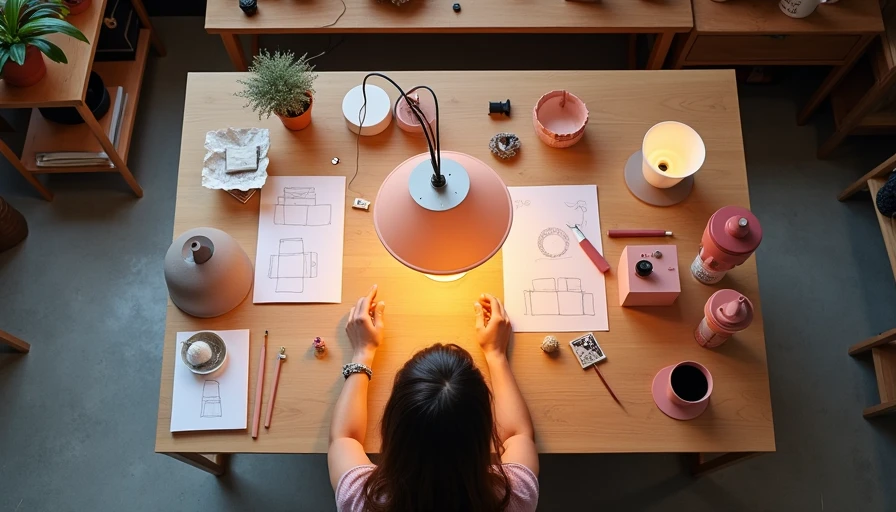
The distinction is visible in the surfaces. Many Gantri lamps have a lightly textured, matte finish that diffuses the light instead of throwing a harsh white patch across the wall. Their silhouettes often look more like small architectural models than conventional table lamps. Some are compact enough for a narrow shelf, while others have enough presence to become the visual anchor of a nightstand or side table.
That design language is the main reason to consider Gantri lamps. You are not only buying illumination. You are buying a small object that changes how a room feels when the overhead lights are off.

How the light works in an actual room
A lamp can look beautiful in a product photograph and still be annoying at 9 p.m. The practical test is whether it gives your eyes a softer alternative to the ceiling fixture. In my apartment, the useful lighting setup is layered: a brighter lamp for reading, a smaller source near the sofa, and something dimmer beside the bed. Gantri lamps fit best into that second or third role.
Most models are better for ambient light than detailed work. If you are trying to read dense print, inspect negatives, or draw precise diagrams, check the brightness and color temperature before ordering. A sculptural table lamp with warm LED light can make a room feel calm, but it should not be expected to replace a dedicated task lamp with an adjustable arm.
The cable and switch matter, too. A beautiful lamp becomes less successful when its cord is too short for your outlet or its switch sits awkwardly behind a monitor. Before buying, measure the surface, note where the cable will run, and decide whether you want the switch within easy reach. These are boring details, but they determine whether the object becomes part of your routine or another thing you have to manage.
Gantri lamps work especially well on a small desk where every object has to earn its footprint. One can give you a visual cue to stop working without introducing a glowing screen, notification, or smart-home app.
The calm-desk case for Gantri lamps
This is where I find the strongest argument. Most desk accessories are designed to increase output: a second monitor, a charging dock, a mechanical keyboard, a timer, another productivity dashboard. Gantri lamps do something quieter. They can mark a transition between focused work and the rest of the evening.
At the end of a work session, switching off the monitor and leaving a warm lamp on changes the room without demanding another decision. There is no account to create, firmware to update, or notification asking you to optimize your lighting schedule. A physical switch is refreshingly complete. You touch it, the room changes, and the interaction ends.
That does not make Gantri lamps a wellness device. A lamp will not repair an overloaded calendar or persuade you to stop checking email. It can, however, make the low-tech choice more pleasant. If your current lighting is a bright ceiling fixture or the blue cast of a monitor, a small lamp beside the desk may do more for the evening than another productivity app.
The restraint is also part of the appeal. There is no reason to buy three matching pieces unless your room genuinely needs them. One well-placed source near the edge of your visual field is often enough.

Price, materials, and everyday value
Gantri lamps generally occupy the premium end of small home lighting. Depending on the design, size, and current collection, expect to compare prices in roughly the $150 to $400 range rather than with a $25 department-store lamp. That is real money for an object whose basic function is to produce light.
The value question therefore has two parts. First, is the lighting itself better suited to your room than a less expensive option? Second, do you care about the form, material story, and designer collaboration enough to use the lamp for years? If the answer to both is yes, the price can feel reasonable. If you mainly need a bright bulb beside a chair, a conventional adjustable lamp will usually be the smarter purchase.
The 3D-printed construction is interesting because it enables shapes that would be difficult or expensive to manufacture conventionally. It also means you should treat the lamp as a designed object, not an indestructible utility. Keep it away from excessive heat, follow the cleaning instructions, and avoid assuming that every part will be easy to replace years later. Confirm the bulb or LED specifications, warranty, return window, and available finishes before checkout.
A useful test is to imagine the lamp after the novelty fades. Can you name the exact surface where it will live? Can you picture turning it on three nights a week? If not, save the money.
Gantri lamps compared with simpler alternatives
A basic IKEA or Target table lamp can solve the lighting problem for far less. Those options are often better when you need an adjustable shade, replaceable bulbs, or a temporary solution for a rental. A task lamp from brands such as Anglepoise or BenQ is more practical for detailed desk work, particularly if you need directional control and strong illumination.
Gantri lamps make more sense when the room already functions and you want to improve its atmosphere. They are closer to a small piece of industrial design than to a commodity lamp. That comparison matters because buying one for productivity alone will probably disappoint you. Buying one because you want a physical, quiet object that softens the room is more honest.
I would also skip a smart lamp unless remote control or scheduling solves a specific problem. Smart features can be useful for accessibility or routines, but they add an app layer to an object that should be simple. The best Gantri lamps are appealing partly because they ask very little from you.
My verdict on Gantri lamps
You need less than you think. If your desk already has pleasant, adjustable light, Gantri lamps are a want, not a need, and that is fine. Design objects do not have to disguise themselves as necessities. If your room feels harsh at night and you want a lamp that contributes shape, warmth, and a screen-free transition, this category earns a closer look.
I would buy one for a clearly defined spot, choose the smallest form that solves the lighting problem, and avoid treating it as a collection. Gantri lamps are not a shortcut to a calmer life. They are a well-made prompt: turn off the big light, put the phone down, and let the room become quieter. The one thing I would keep is the physical switch, because sometimes the best interface is the one that ends when you touch it.