Do you actually need a wall mounted cd player? I asked myself that while looking at the small stack of CDs beside my desk, most of them bought before streaming became the default. The answer is not an automatic yes. But for the right room, this overlooked little device can create something streaming apps rarely do: a clear beginning and end to listening.
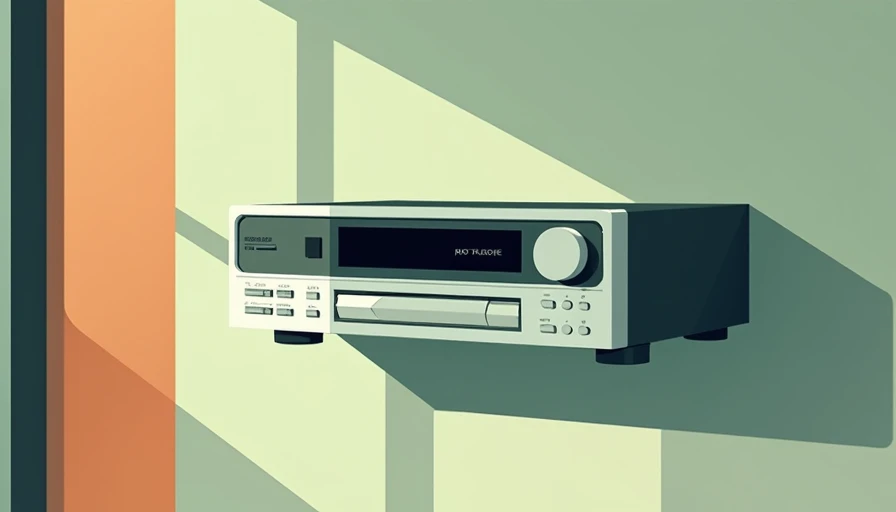
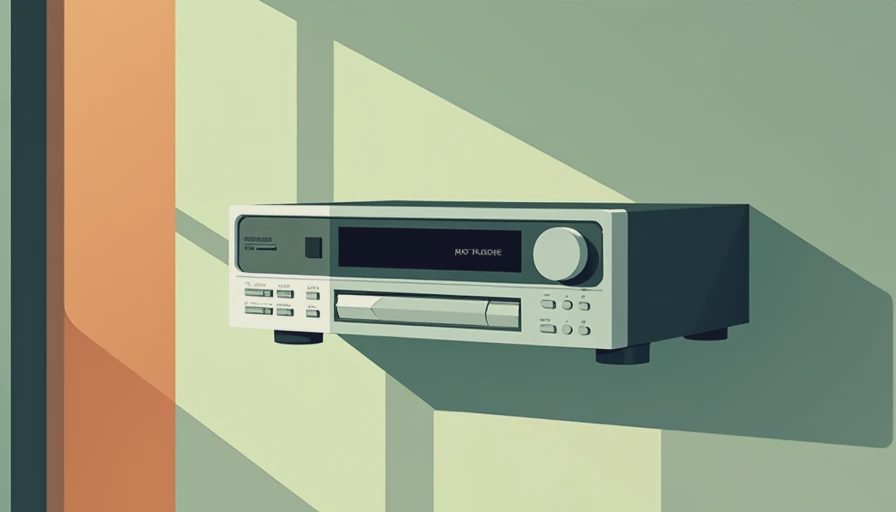
A wall mounted cd player is usually a slim, vertically oriented unit that attaches to a wall and plays standard audio CDs. Many include Bluetooth, FM radio, a remote, and a simple display. The appeal is less about audiophile performance than reducing friction. You insert a disc, press play, and stop making decisions. There is no recommendation feed, podcast queue, or phone notification waiting beside the controls.
Why put a CD player on the wall?
The wall placement solves two practical problems. First, it saves desk or shelf space. A compact unit often takes up less than a paperback when viewed from the front, while its cable and speaker arrangement stay visually contained. Second, it changes the physical relationship between you and the music. You are not carrying another rectangle around or opening an app that also contains email, messages, and social media.
That distinction matters more than it sounds. I have opened Spotify intending to play one album and surfaced forty minutes later with a new playlist, three saved records, and no memory of why I picked up the phone. A dedicated player does not have those attention hooks. Its limits are the point. A CD is a finite object with a known track list, and that can make an evening feel more deliberate.
The design is also useful in small apartments, kitchens, bedrooms, and home offices. Mount it near a reading chair, above a narrow console, or beside a desk where a traditional stereo would be awkward. Just keep it away from direct steam, splashing water, and extreme heat. Most models are not designed for a bathroom or the wall directly above a stove.
What to look for before buying
A good wall mounted cd player should make basic actions obvious. Look for physical play, pause, previous, next, and volume controls rather than a tiny collection of unlabeled buttons. A remote is helpful when the unit is mounted above eye level, but it should not be the only way to control playback. A display that shows track number and elapsed time is more useful than decorative lighting.
Check the speaker setup carefully. Some inexpensive models use built-in stereo speakers with modest output, suitable for a bedroom or office but thin in a larger living room. Others provide a headphone jack, a line-out connection, or Bluetooth transmit and receive functions. Those features let you use wired headphones, powered speakers, or existing wireless headphones instead of replacing the whole listening system.
Price is usually a better guide to construction and connectivity than to emotional value. Entry-level units commonly land around $40 to $80. Midrange options from brands such as Jensen, Philips, or Sangean often sit near $80 to $150, depending on features. A premium compact stereo can cost more, especially when it includes stronger speakers or a better external connection. You do not need to spend $300 to find a pleasant, functional player, but the cheapest models can have loud button clicks, weak remotes, or awkward wall brackets.
Before ordering, confirm the mounting method. Some products include a bracket and hardware; others only have a keyhole slot and expect you to supply a suitable screw. If you rent, removable mounting strips are tempting, but a spinning disc and speaker vibration can expose their limits. A small level, a stud finder, and a few minutes of measuring are better than repairing a dropped device.
The listening experience in daily life
I tested the idea with three kinds of discs: an album I know well, a compilation with uneven tracks, and a spoken-word recording. The familiar album worked best. Once it started, I left it alone and returned to writing. The compilation required more skipping, which reminded me why streaming interfaces are so persuasive: they make endless correction effortless.
That is not a defect in the player. It is a useful boundary. A wall mounted cd player asks whether you want to hear this disc, not whether you want the theoretically perfect song for the next seven minutes. Sometimes the answer is no. Sometimes you discover that an album you had mentally dismissed works better when you stop judging every track individually.
Sound quality depends heavily on expectations and room size. Built-in speakers can sound clean at moderate volume, but they are not a replacement for a serious stereo system. A small room with books, curtains, and furniture will usually feel more comfortable than a bare space with hard walls. If you want fuller bass, connect powered bookshelf speakers through the available output or choose a model designed for an external system.
The controls are part of the pleasure. A physical skip button has a satisfying finality that a touchscreen gesture does not. You can see the disc, hear the mechanism spin, and remember what you chose. That small amount of resistance is not inconvenience for its own sake. It is a way to make listening visible.
Where it fits, and where it does not
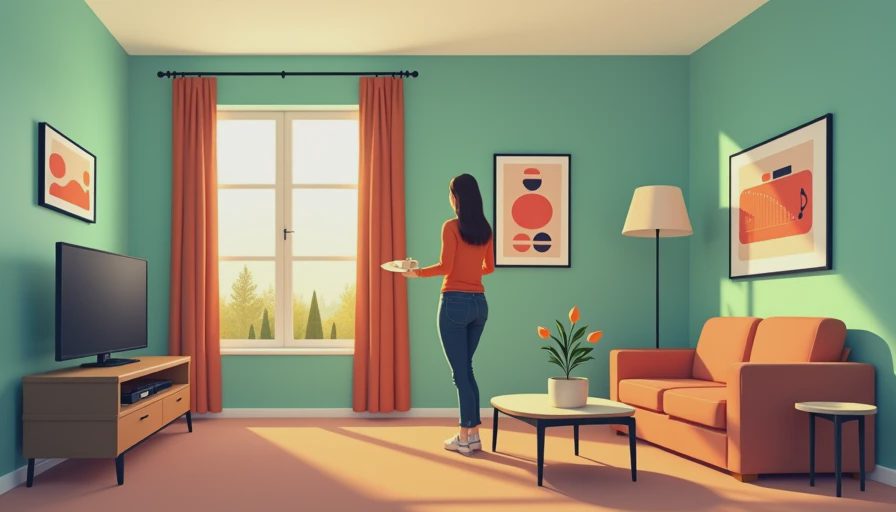
A wall mounted cd player makes sense if you already own CDs, want music away from your phone, or enjoy a fixed listening ritual. It can be especially good for a morning workspace. Put on one disc before opening Slack, and you have a natural limit for the first block of work. In a bedroom, it can replace the habit of scrolling until sleep. In a child-free guest room or reading corner, it adds sound without inviting another screen into the space.
It is less convincing if your collection is entirely digital, you need multiroom audio, or you usually listen to playlists that change every few minutes. Bluetooth support can bridge some of that gap, but then the phone returns as the source and the calm advantage becomes smaller. Likewise, if you want room-filling sound for parties, a compact wall unit is the wrong tool. Buy the device for the ritual, not for an imagined upgrade into a full hi-fi system.
One practical concern is disc compatibility. Standard audio CDs are the safest bet. Some models also play MP3 files burned to a data disc, while others do not. Check whether the player supports your format before transferring a digital collection. Also inspect the return policy. CD mechanisms are more mechanically complex than a basic Bluetooth speaker, and an irritating tray or unreliable button will quickly turn a charming object into drawer clutter.
My setup and the one thing I would keep
If I were setting up a small apartment from scratch, I would choose a white or charcoal unit with a clean display, physical controls, a remote, Bluetooth, and a headphone output. I would mount it at seated eye level rather than high on the wall, hide the cable in a paintable channel, and place a short stack of frequently played discs nearby. The collection would stay intentionally small: five to ten albums, not a new storage problem.
My favorite use is not background music all day. It is a single album during a task that deserves a boundary: cooking, editing photographs, cleaning, or reading the last few pages of a book. When the disc ends, I have a decision point. Start another one, or let the room be quiet. That pause is easy to underestimate when every app is designed to remove it.
So, do you actually need a wall mounted cd player? Probably not in the strict survival sense. You need less than you think. But if you own music you want to hear again and want one corner of your home to be less connected to the internet, this is one of the few gadgets whose limitations improve the experience. I would skip the flashy model with excessive lighting and keep the simple player that makes one album easy to choose.